

How to Build a Crypto Exchange Like Binance in 2026: The Complete Guide
Let's start with a number that puts everything in context: $17 billion.
That is what Binance generated in revenue during the 2024 financial year — a 40% increase over 2023 — while maintaining a 38% market share among centralized exchanges as of April 2025. No other platform in the crypto industry comes close to that combination of scale, liquidity depth, and sustained revenue growth.
For entrepreneurs planning to launch their own crypto exchange, Binance isn't just a competitor to admire from a distance. It is a proven blueprint to learn from. And in 2026, a Binance clone script gives ambitious founders a direct path to replicating that blueprint — faster, more affordably, and with far less technical risk than building from scratch.
This guide covers everything you need to know: the different ways to build a Binance-like exchange, why a Binance clone script is the smartest choice for most startups, the features that matter most, how these platforms generate revenue, and the step-by-step process to get from concept to launch.
Why Build a Crypto Exchange Like Binance?
Binance didn't become the world's largest crypto exchange by accident. It got there through high liquidity, an expansive feature set, institutional-grade security, and a relentless focus on giving traders the tools they need across spot, margin, futures, and staking — all under one roof.
Those same qualities are what crypto users expect from any serious exchange today. The good news for entrepreneurs is that the infrastructure required to deliver that experience is no longer the exclusive domain of well-funded teams building for years. A properly built Binance exchange clone compresses what once took 18 months into a fraction of the time, without sacrificing the core functionality that makes the Binance model so compelling.
Exchanges are the on-ramps and off-ramps of the entire crypto economy. Every transaction, every new market entrant, every institutional dollar moving into digital assets flows through exchange infrastructure. That makes owning a well-built crypto exchange one of the most strategically valuable positions in the entire Web3 ecosystem.
Three Ways to Launch a Crypto Exchange Like Binance
Before diving into why a Binance clone script is the recommended path, it's worth understanding all three options available to founders entering this space.
Option 1: Build From Scratch
Building a crypto exchange from the ground up gives you complete control over every feature, every design decision, and every technical architecture choice. If your vision requires capabilities that don't exist in any current platform, this is the path that makes that possible.
The tradeoff is significant. Custom development requires assembling a specialized team of blockchain engineers, security architects, UI/UX designers, and compliance specialists. Development timelines typically run 12 to 24 months. Costs scale accordingly. And the risk of delays, security vulnerabilities, and feature gaps during development is substantially higher than with a proven, pre-tested solution.
For most crypto startups in 2026, building from scratch is the most expensive way to answer a question that a Binance clone script can answer faster and at a fraction of the cost.
Option 2: White Label Crypto Exchange Software
A white label exchange solution is a pre-built platform that you brand as your own — your logo, your color scheme, your domain. It is faster and more affordable than custom development and gives you a functional exchange without starting from zero.
The limitation is flexibility. White label solutions are typically less customizable at the feature level than a purpose-built Binance exchange clone, and they may not include the full suite of trading products — margin, futures, staking, launchpad — that serious traders expect from a competitive exchange in 2026.
Option 3: Binance Clone Script
A Binance clone script is pre-built exchange software engineered to replicate the full functionality of the Binance platform — matching engine, multi-asset wallets, spot and derivatives trading, KYC/AML systems, admin controls, and security infrastructure — while being fully customizable to your brand, market focus, and feature priorities.
This is the option that delivers the best balance of speed, cost efficiency, feature completeness, and long-term scalability. It is the foundation this guide is built around.
Why a Binance Clone Script Is the Smartest Choice in 2026
The case for a Binance clone script comes down to five practical advantages that matter enormously for startups operating in a competitive, fast-moving market.
Speed to Market: A Binance clone script already has every core feature built and tested. Rather than spending a year in development, you spend weeks in customization and configuration. In a market where timing matters, that head start is a genuine competitive advantage.
Cost Efficiency: Custom exchange development can cost hundreds of thousands of dollars before a single user trades. A Binance clone script compresses that cost dramatically — a one-time development fee rather than an ongoing burn rate on a large engineering team.
Proven Functionality: Your Binance exchange clone is modeled on a platform that processes billions of dollars in daily trading volume. The feature set has been validated by millions of users over years of real-world use. You are not guessing what traders want — you are delivering what you already know they value.
Robust Security: Professional-grade Binance clone scripts come with battle-tested security infrastructure already integrated — two-factor authentication, SSL encryption, DDoS protection, multi-signature wallets, and anti-phishing controls. Security is built in, not bolted on.
Customization Flexibility: A Binance clone app is a starting point, not a ceiling. You can add trading pairs, integrate new blockchain networks, introduce staking or NFT features, modify the UI for your target market, and build unique features that differentiate your platform from every other exchange in your competitive set.
Core Features of a Binance Clone App
A competitive Binance clone app in 2026 needs to serve two distinct groups: the traders who use the platform and the admin team who operates it. Here is what each side requires.
User-Facing Features
Fast, Streamlined KYC — First impressions matter. A smooth identity verification process gets users from registration to first trade without unnecessary friction. Slow or clunky KYC is one of the most common reasons new users abandon exchange onboarding.
Multi-Asset Support — Your Binance exchange clone should support an extensive and growing list of cryptocurrencies — Bitcoin, Ethereum, BNB, and hundreds of altcoins — giving traders the asset variety they expect from a serious platform.
High-Performance Matching Engine — The matching engine is the technical heart of your exchange. It must process thousands of orders per second with near-zero latency, ensuring fair and accurate order execution even during high-volatility market conditions.
Spot, Margin, and Futures Trading — A Binance clone script should support the full trading product suite that defines the Binance experience. Spot trading for straightforward buying and selling, margin trading for leveraged positions, and futures contracts for advanced speculation and hedging.
Fiat On and Off Ramps — Allowing users to deposit and withdraw in their local currency via bank transfers and payment cards dramatically expands your addressable market beyond the existing crypto-native audience.
Intuitive Trading Dashboard — Clean, information-rich interface with real-time charts, order book depth, position management, and portfolio overview. Professional traders should feel at home; newcomers should not feel lost.
Secure Integrated Wallets — Built-in hot and cold wallet infrastructure with industry-standard security protocols, giving users confidence that their funds are safe on your platform.
Staking and Yield Products — On-platform staking allows users to earn yield on their holdings without leaving your ecosystem — a powerful retention mechanic that reduces withdrawal frequency and increases average assets under custody.
Real-Time Notifications — Price alerts, order fill confirmations, deposit and withdrawal updates, and security notifications keep users informed and engaged with the platform.
Full-Featured Mobile App — A Binance clone app with complete mobile functionality is not optional in 2026. The majority of crypto trading activity now originates on mobile devices, and your app needs to deliver the full desktop experience on a smartphone screen.
Admin-Facing Features
Comprehensive Admin Dashboard — A unified control center giving your operations team real-time visibility into user activity, trading volumes, revenue metrics, system health, and security events.
User Management and KYC Controls — Tools to approve or restrict accounts, manage identity verification workflows, monitor suspicious behavior, and maintain compliance with regulatory requirements.
Liquidity Management — Built-in tools to connect with external liquidity providers via API, manage order book depth across trading pairs, and ensure smooth execution for users even during periods of low organic volume.
Fee Configuration System — Flexible, granular control over trading fees, withdrawal fees, deposit charges, and maker/taker fee structures across different user tiers and trading pairs.
Token Listing Management — A streamlined workflow for reviewing, approving, and listing new cryptocurrency projects on your Binance exchange clone — complete with fee management for listing applications.
Revenue Analytics and Reporting — Real-time tracking of every revenue stream, detailed transaction logs, and customizable reporting that gives leadership the data they need to make informed growth decisions.
Content Management System — Ability to update website content, announcements, FAQs, promotional banners, and blog posts without developer intervention.
Customer Support Infrastructure — Integrated ticketing system for managing user inquiries, resolving disputes, and tracking support team performance and response times.
Advanced Security Controls — Admin-level tools to configure DDoS protection rules, manage IP whitelisting, monitor suspicious login patterns, and respond to security incidents in real time.
Revenue Streams: How a Binance Exchange Clone Makes Money
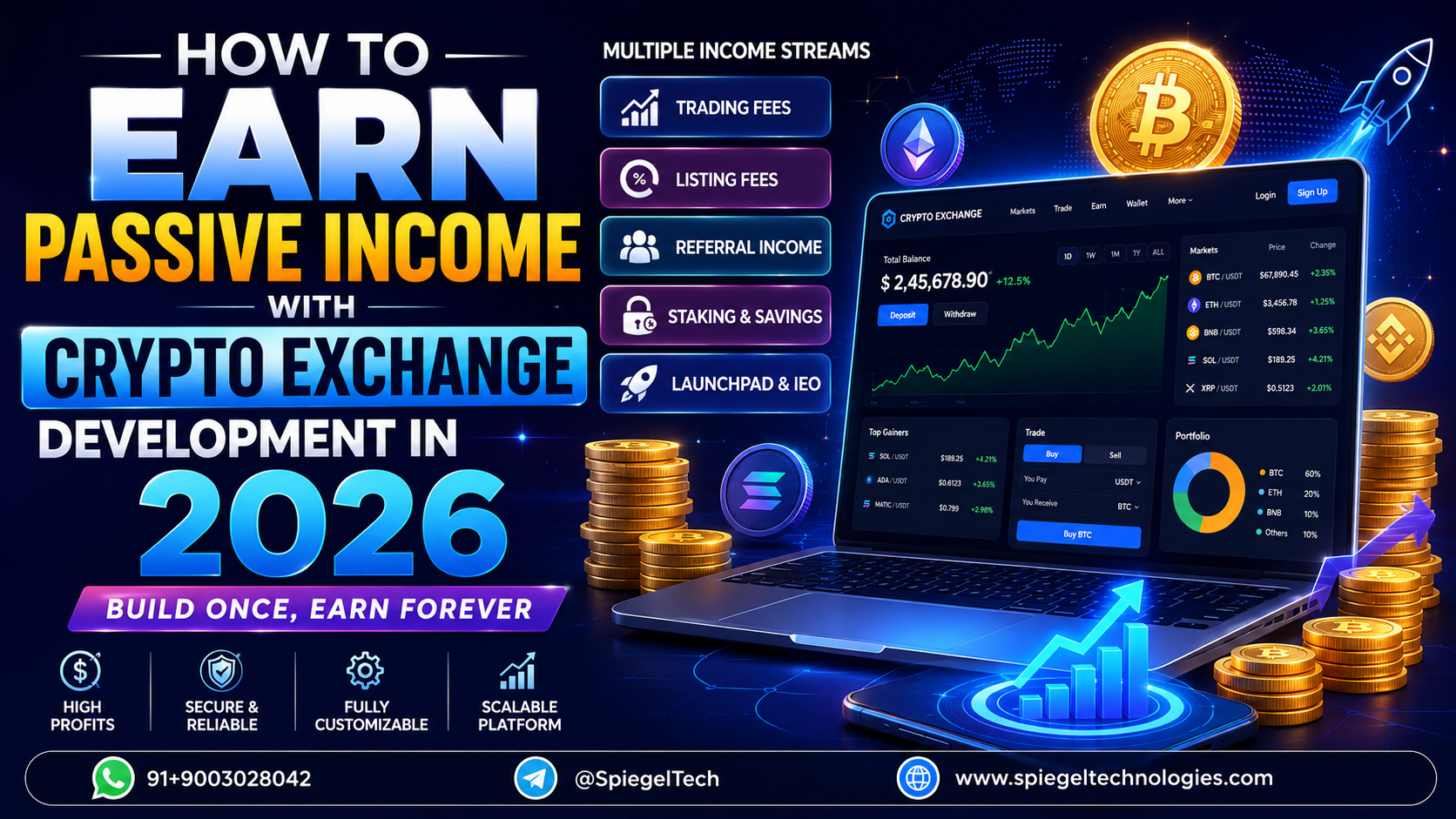
One of the most compelling arguments for launching a Binance exchange clone is the diversity of revenue streams available to exchange operators. This is not a single-revenue-stream business — it is a platform that generates income from multiple sources simultaneously.
Trading Fees are the primary revenue engine. Charging a small percentage on every trade executed on your platform generates significant cumulative revenue as trading volume grows. Even modest fee rates produce substantial income at scale.
Withdrawal Fees provide a consistent revenue layer every time a user moves funds off your platform. These fees are small per transaction but meaningful in aggregate across a large, active user base.
Token Listing Fees monetize the demand from crypto projects that want exposure to your user base. New projects pay to have their tokens listed on your Binance clone script platform, generating upfront revenue from ecosystem growth.
IEO Launchpad Commissions allow your exchange to earn a percentage of fundraising activity when you host Initial Exchange Offerings for early-stage crypto projects — while simultaneously driving new user registrations from each project's community.
Staking Revenue Share lets you earn a percentage of staking rewards generated by assets held on your platform, creating a passive revenue stream that scales with assets under custody.
Premium Account Subscriptions generate recurring revenue from professional traders who pay for advanced features, lower fee tiers, priority customer support, and exclusive analytical tools.
Advertising and Sponsored Promotions allow crypto projects to pay for banner placement, featured listings, and promotional campaigns targeting your active trading audience.
API Access Fees monetize the developer and algorithmic trading community, charging for programmatic access to your exchange's trading infrastructure.
Margin Interest generates revenue when users borrow funds for leveraged positions — the interest charged on margin loans flows directly to your platform.
Fiat Gateway Commissions earn a percentage of every fiat deposit and withdrawal processed through your exchange's payment infrastructure.
Step-by-Step Process to Launch Your Binance Exchange Clone
Step 1: Market Research and Legal Foundation
Before any development begins, invest time in understanding your target market — the geography you plan to serve, the trader profiles you want to attract, and the competitive landscape you are entering. Simultaneously, engage legal counsel to understand the licensing, compliance, and regulatory requirements applicable to crypto exchange operations in your target jurisdictions. Getting legal structure right from the start is far less expensive than correcting it under regulatory pressure later.
Step 2: Select a Reputable Binance Clone Script Provider
Your choice of development partner determines the quality of your foundation. Evaluate providers on their security audit history, customization capabilities, post-launch support model, and portfolio of live exchange deployments. Always request a live demo of the Binance clone script before committing — seeing the matching engine, trading interface, and admin dashboard in action tells you more than any feature list can.
Step 3: Customize Your Binance Clone App
With your provider selected, the customization phase begins. This involves brand integration — your logo, color scheme, and domain — along with configuring supported trading pairs, setting fee structures, and making UI/UX adjustments tailored to your target audience. Integrate with liquidity providers to ensure order book depth from day one, and configure all security layers including 2FA, SSL encryption, cold wallet infrastructure, and DDoS protection.
Step 4: Rigorous Testing Before Launch
Never launch a financial platform without comprehensive end-to-end testing. Your QA process should cover trading engine performance under simulated load, deposit and withdrawal flows across all supported assets, KYC verification workflows, admin dashboard functionality, security penetration testing, and mobile app performance across device types and connection speeds. Issues found in testing cost hours to fix. The same issues found post-launch cost users and reputation.
Step 5: Deployment and Go-Live
With testing complete and all systems validated, deploy your Binance exchange clone on secure, scalable infrastructure. A staged rollout — starting with a limited user group before opening to the public — gives you a final real-world validation opportunity and allows your team to resolve any edge-case issues before full-scale exposure.
Step 6: Growth Marketing and User Acquisition
Your exchange is live — now the business building begins. A multi-channel growth strategy combining SEO content marketing, targeted digital advertising, crypto influencer partnerships, referral bonus programs, and community building on Twitter and Discord will build the user base and trading volume that transforms your Binance clone app from a launch into a sustainable business.
Final Thoughts: Why a Binance Clone Script Is Your Shortcut to Success
The crypto exchange market is large, growing, and rewarding for operators who build with quality and long-term thinking. A Binance clone script gives entrepreneurs the proven infrastructure, feature depth, and time-to-market advantage to compete seriously in that market without the cost, risk, and delay of custom development.
Binance built its $17 billion revenue business over years of iteration, investment, and scale. A Binance exchange clone lets you start from a position of strength — with the functionality that took Binance years to develop, ready to customize, brand, and launch as your own.
The opportunity is real. The infrastructure exists. The question is whether you are ready to build.
What is a Binance clone script?
A Binance clone script is a ready-made cryptocurrency exchange software solution that replicates the core functionality of Binance, including spot trading, futures trading, wallets, KYC verification, liquidity management, and administrative controls.
How much does it cost to develop a Binance clone exchange?
The cost depends on customization requirements, supported blockchain networks, liquidity integrations, security features, and mobile app development. A Binance clone solution is generally much more affordable than building a crypto exchange from scratch.
How long does it take to launch a Binance clone app?
Most Binance clone exchanges can be customized, tested, and launched within a few weeks to a few months, depending on project complexity and integrations.
Can a Binance clone support futures and margin trading?
Yes. Advanced Binance clone scripts include spot trading, margin trading, perpetual futures, leverage management, and risk-control systems.
Is a Binance clone script secure?
Professional Binance clone software includes two-factor authentication, SSL encryption, multi-signature wallets, cold storage integration, DDoS protection, and anti-phishing security measures.
Can I customize a Binance exchange clone?
Yes. You can customize the UI, branding, supported cryptocurrencies, blockchain integrations, trading pairs, fee structures, staking features, and additional Web3 functionalities.
How does a Binance clone exchange make money?
Revenue sources include trading fees, withdrawal fees, token listing fees, staking commissions, launchpad services, premium memberships, margin interest, API subscriptions, and advertising placements.
Do I need a license to operate a crypto exchange?
Regulatory requirements vary by country and jurisdiction. It is recommended to consult legal and compliance experts before launching a cryptocurrency exchange platform.
Can a Binance clone support multiple cryptocurrencies?
Yes. Most Binance clone platforms support Bitcoin, Ethereum, BNB, stablecoins, and hundreds of additional digital assets.