

- Fast KYC Process — Users can sign up and verify their identity quickly, without unnecessary friction.
- Multi-Coin Support — Trade Bitcoin, Ethereum, BNB, and a wide range of other cryptocurrencies.
- Advanced Trading Engine — Orders get matched quickly and accurately, even during high-volume periods.
- Multiple Trading Options — Spot, margin, and futures trading, just like Binance offers.
- Fiat Integration — Let users deposit or withdraw in their local currency via bank transfer or card.
- Clean User Dashboard — A simple, intuitive space to manage accounts and track trades.
- Secure Wallets — Built-in hot and cold wallet options for storing funds safely.
- Staking Features — Let users stake their crypto and earn passive interest.
- Real-Time Notifications — Instant alerts for price changes, order status, and platform updates.
- Mobile App Access — A fully functional mobile experience so users can trade on the go.
- Admin Dashboard — A single view of user stats, trades, earnings, and overall system health.
- User Controls — Approve or block accounts, manage KYC, and monitor user behavior.
- Liquidity Tools — Connect to liquidity providers to keep trading smooth and spreads tight.
- Fee Management — Set and adjust trading, deposit, and withdrawal fees as needed.
- Token Listing Panel — Add new cryptocurrencies to your platform with minimal hassle.
- Reports and Logs — Pull detailed reports on trades, revenue, and user activity.
- Revenue Tracker — Monitor every income stream in real time.
- CMS Tools — Update website content, FAQs, banners, and blog posts without developer help.
- Customer Support System — Manage and resolve user issues through an integrated ticketing system.
- Security Controls — Configure DDoS protection, anti-phishing measures, and data encryption rules.
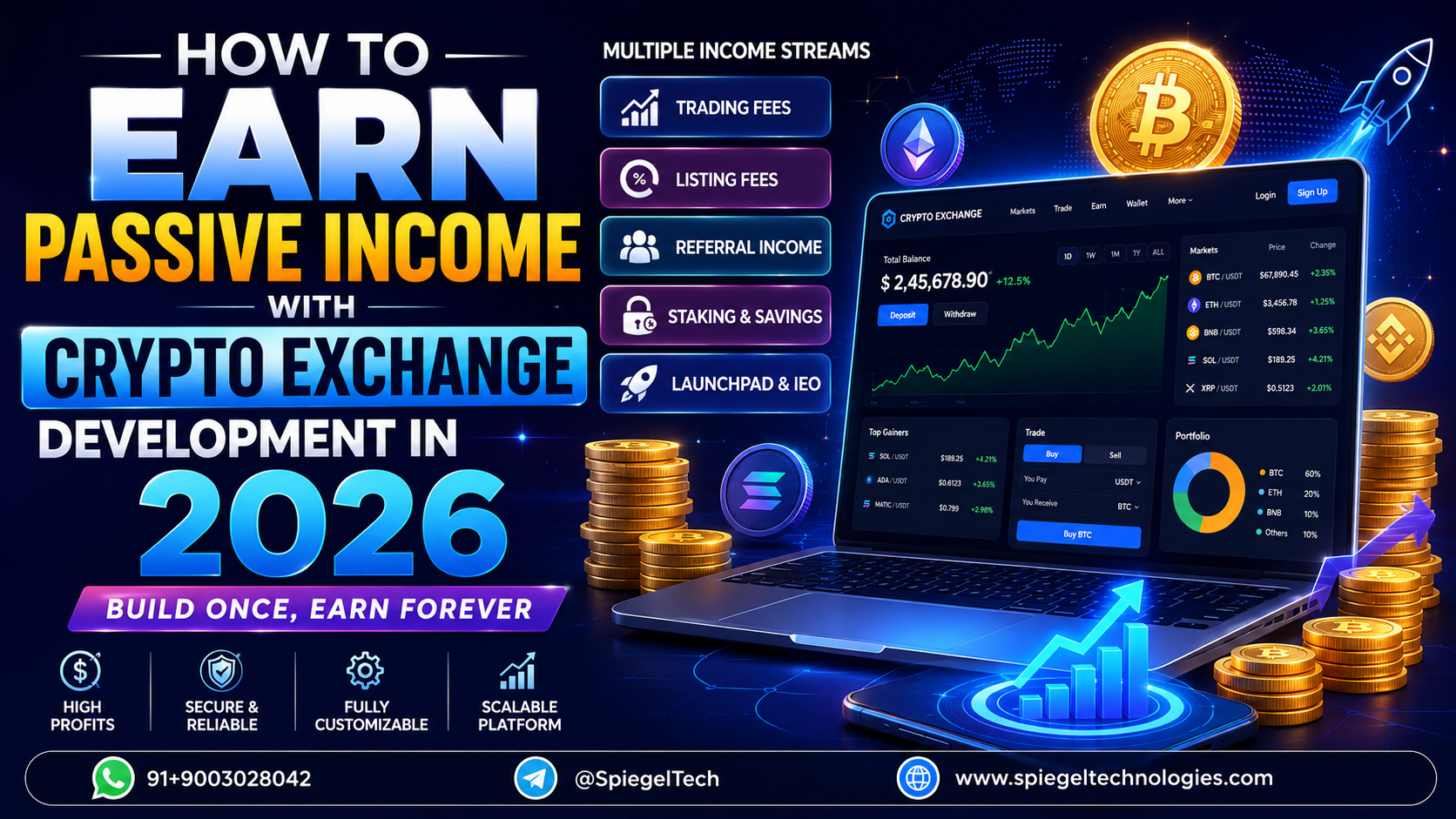
- Trading Fees — A small fee on every trade that adds up quickly as volume grows.
- Withdrawal Fees — A small charge whenever users move funds off your platform.
- Token Listing Fees — New crypto projects pay to get listed on your exchange.
- IEO Launchpad — Launch tokens for other companies and earn a commission on each sale.
- Staking Services — Let users stake coins and take a cut of the resulting rewards.
- Premium Accounts — Offer advanced tools and features for a monthly subscription fee.
- Ads and Promotions — Generate income through banner ads or promoted token placements.
- API Access Fees — Charge developers and institutional traders for API access.
- Margin Interest — Earn interest when users borrow funds for margin trading.
- Fiat Gateway Commission — Take a cut from every fiat deposit or withdrawal processed.
How to Build a Cryptocurrency Exchange Like Binance: Methods, Features, and Costs
Binance pulled in roughly $17 billion in revenue for the 2024 financial year — a 40% jump from 2023. It still holds the crown as the largest centralized exchange in the industry, commanding a 38% market share as of April 2026. That kind of growth doesn't happen overnight. It's built on high liquidity, a feature-rich platform, and security standards that have earned trader trust over years.
Binance has also become the blueprint for entrepreneurs in the space — proof that giving users real value translates into consistent, compounding revenue. Following the path of industry pioneers is one of the smartest shortcuts to success. So if you're a startup founder or enterprise owner wondering how to build a cryptocurrency exchange of your own, you're in the right place.
In this guide, we'll walk through the different ways to build a crypto exchange like Binance, explain why a Binance Clone Script is often the smarter choice, break down its key features, show how these platforms generate revenue, and lay out a step-by-step plan to launch one — including a realistic look at Binance clone development cost.
Ways to Launch an Exchange Like Binance
There's more than one path to building a crypto exchange like Binance, and each comes with its own trade-offs. Here's a breakdown of your three main options.
1. Build From Scratch
This is the most time-consuming and expensive route. You'll need to hire a full team of developers to design, build, test, and launch your exchange from the ground up. The upside? Complete control over every feature and every design decision — but that control comes at a steep cost in both time and budget.
2. White-Label Crypto Exchange Software
A white-label crypto exchange is a ready-made platform you can rebrand with your own logo, color scheme, and select customizations. It's significantly faster and cheaper than building from scratch, making it a popular entry point for businesses that want to move quickly without sacrificing too much flexibility.
3. Binance Clone Script
A Binance Clone Script is pre-built software engineered to function just like Binance. It arrives with all the essential features you'd expect — trading, wallets, order matching, and security tools — fully built in. From there, you customize it to reflect your own brand, fee structure, and target market.
Why Choose a Binance Clone Script
A Binance Clone Script stands out for several reasons. First, it saves an enormous amount of time — all the critical features are already built, so you're not starting from zero. Second, it's far more affordable. Instead of funding months of custom development, you pay a one-time licensing cost or a smaller development fee and you're ready to launch. That makes a white-label Binance Clone Script a natural fit for startups and small businesses working with tighter budgets.
There's also a strategic advantage in following a proven model. A clone script mirrors the style and functionality of a platform users already understand and trust — which shortens the learning curve and builds confidence from day one.
Security is another major factor. These clone scripts ship with tested, battle-hardened security tools instead of unproven, custom-built protections. And finally, they're flexible: you can add or remove features, redesign the interface, support multiple coins, and layer in newer trends like staking, margin trading, or NFT marketplaces — all without rebuilding your platform from the ground up.
Main Features of a Binance Clone Script
Your exchange needs to serve two distinct audiences: the traders using your platform and the admin team running it behind the scenes. Here's what each side needs.
User-Facing Features
Admin-Facing Features
Revenue Streams of a Binance Clone Script
One of the biggest draws of running your own exchange is the sheer number of ways it can generate income. Here's how a Binance-like platform typically earns revenue:
How to Build a Cryptocurrency Exchange: Step-by-Step Process
Step 1: Research & Legal Support
Identify your target audience and work with legal experts to ensure your exchange complies with local regulations — governments worldwide are tightening crypto oversight, and compliance from day one saves you costly problems later.
Step 2: Choose the Right Clone Script Provider
Select a trustworthy crypto exchange development company offering a secure, customizable, and thoroughly tested Binance Clone Script. Always request a live demo before committing.
Step 3: Customize Your Exchange
Adjust the branding, design, trading pairs, and user interface, then integrate liquidity providers so trades execute smoothly. Layer in strong security measures — 2FA, SSL encryption, and other essential safeguards — before moving forward.
Step 4: Test & Launch
Run comprehensive testing across every function: trading, deposits, withdrawals, and customer support. Once everything checks out, deploy your exchange on a secure server and go live.
Step 5: Promote and Grow
Drive user growth through digital marketing, SEO, influencer partnerships, and referral bonuses to build momentum after launch.
What Does Binance Clone Development Cost?
Pricing for a Binance Clone Script varies depending on customization depth, security requirements, and the features you need at launch. A basic, lightly customized script will cost far less than a fully white-labeled platform with advanced trading options, multi-region compliance, and enterprise-grade security baked in. Generally, the more tailored and feature-rich your exchange, the higher the Binance clone development cost — but even at the premium end, it remains a fraction of what building from scratch would demand. Getting quotes from a few established providers, with clear feature breakdowns, is the best way to find the right balance between budget and capability.
Final Words
With so many business opportunities in the crypto industry, you might wonder why a Binance Clone Script stands out as the way to build your exchange. The answer is simple: it's a proven method, and exchanges function as the on-ramps and off-ramps of the crypto economy. Most importantly, a Binance Clone Script gives you a tested shortcut to success — letting you launch faster, spend smarter, and compete sooner in a market that rewards speed.
FAQs
Q1. How much does it cost to build a crypto exchange like Binance?
A crypto exchange can cost anywhere from $4,000 using a clone script to $8,000+ for a fully custom-built platform depending on features, security, and scalability.
Q2. What is a Binance Clone Script?
A Binance Clone Script is a ready-made software solution that replicates Binance’s core features like trading engines, wallets, and security systems, allowing faster and cheaper launch.
Q3. Is it better to build a crypto exchange from scratch or use a clone script?
For startups, a clone script or white-label solution is usually better due to lower cost and faster deployment. Building from scratch is suitable for enterprises needing full customization.
Q4. What features are essential in a crypto exchange?
Key features include multi-currency support, trading engine, KYC verification, wallets, liquidity integration, admin dashboard, and security layers like 2FA and encryption.
Q5. How do crypto exchanges make money?
They earn through trading fees, withdrawal fees, token listings, staking services, margin trading interest, and advertising revenue.