
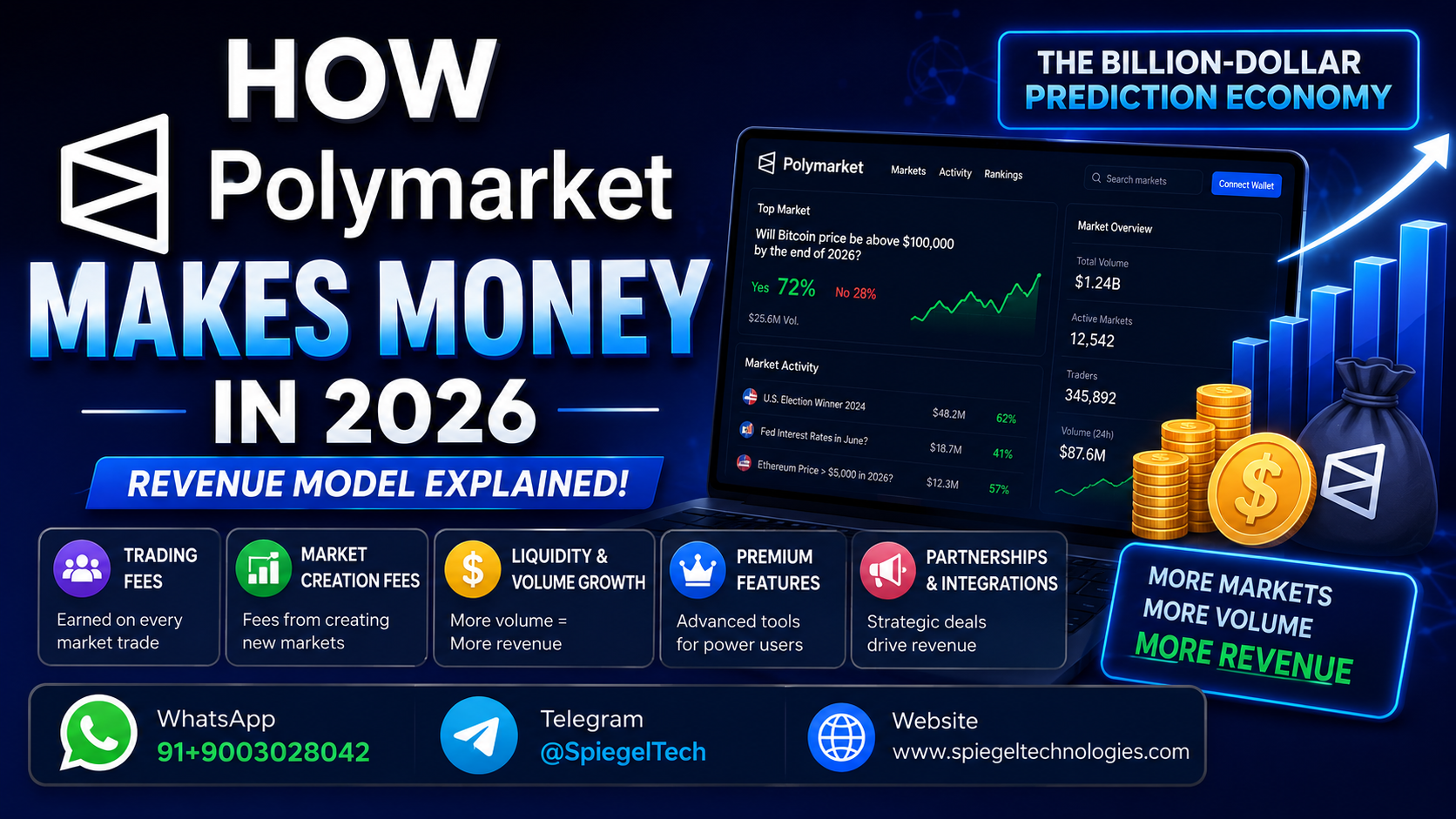
How Polymarket Makes Money in 2026: Revenue Model, Fees, and Business Strategy Explained
How Polymarket Makes Money in 2026: Revenue Model, Fees, and Business Strategy Explained
Prediction markets are becoming a cornerstone of decentralized finance (DeFi) and Web3 ecosystems. Among them, Polymarket stands out as a leading platform for trading on real-world event outcomes. But how does Polymarket actually work, and how does it generate revenue in 2026? Let’s break it down.
If you've been searching for how prediction market platforms actually work, you're not alone. "How does Polymarket work" has become one of the most searched questions across the Web3 industry — and for good reason. As decentralized forecasting ecosystems reshape how people speculate on real-world events, entrepreneurs, crypto users, and investors are all paying close attention.
Traditional betting systems suffer from a familiar set of problems: centralized control, slow payouts, and a chronic lack of transparency. Conventional forecasting tools, meanwhile, lack the real-time market-driven accuracy that serious analysts demand. In 2026, blockchain-powered prediction market platforms are stepping in to solve both problems at once — and the results are turning heads across the DeFi and fintech worlds.
What Is Polymarket and Why Does It Matter?
Polymarket is one of the world's most recognized decentralized prediction market platforms, allowing users to trade on the probable outcomes of real-world events. Instead of placing traditional bets, users buy shares that represent the statistical likelihood of something happening — from election results and crypto price movements to sports outcomes, economic trends, and breaking global news.
What sets Polymarket apart from centralized betting websites is its underlying infrastructure. The Polymarket prediction market runs entirely on blockchain technology and smart contracts, enabling trustless, transparent settlement without relying on any central authority. This combination of financial incentives and crowd intelligence has made it a benchmark for the entire prediction market software development industry.
With hundreds of millions of dollars flowing into crypto prediction applications and event-based trading platforms, the growth curve is steep — and entrepreneurs are paying close attention to how platforms like Polymarket are monetized, structured, and built.
How Does Polymarket Work? A Step-by-Step Breakdown
Understanding how prediction market platforms like Polymarket function is the first step to either trading on them or building one of your own.
Step 1: Connect a Crypto Wallet Users begin by connecting a Web3 wallet like MetaMask to the platform, then depositing stablecoins such as USDC to fund their trading activity.
Step 2: Browse Prediction Markets Once connected, users can explore event categories spanning cryptocurrency trends, politics, global news, sports, and financial markets. Each market presents possible outcomes — typically structured as "Yes" or "No" propositions.
Step 3: Analyze Market Probabilities Every outcome carries a dynamic price driven by market sentiment. If "Yes" shares are trading at $0.75, the market is collectively estimating a 75% probability that the event will occur. This is crowd intelligence in action.
Step 4: Buy Shares Based on Your Prediction Users purchase shares aligned with their expectations. Believers in the outcome buy "Yes" shares; skeptics buy "No" shares. Prices shift in real time as more trades are executed.
Step 5: Monitor and React to Market Movements Share prices fluctuate continuously based on trading activity, news developments, and shifting sentiment. Traders can hold their positions through resolution or sell early to lock in gains.
Step 6: Event Verification and Settlement When the real-world event concludes, decentralized oracle systems feed the verified outcome to the smart contracts, which then settle the market automatically — no manual intervention required.
Step 7: Winning Shares Pay Out Winning shares settle at $1.00 each, while losing shares expire worthless. Payouts are distributed automatically and instantly, with no intermediary taking a cut of the process.
This transparent, automated workflow is exactly why prediction market platforms are among the fastest-growing segments of the Web3 economy in 2026.
The Technology Powering Modern Prediction Market Platforms
Anyone serious about prediction market software development needs to understand the four core technologies that make platforms like Polymarket function reliably at scale.
Smart Contracts are the backbone. They automatically execute contract terms, manage user funds in escrow, and settle outcomes the moment verified event data is received — all without human involvement. This eliminates trust issues that plague centralized alternatives.
Blockchain Infrastructure ensures every trade, deposit, and settlement is recorded on an immutable, publicly auditable ledger. Users can independently verify any transaction, which is a foundational requirement for platforms claiming to be truly decentralized.
Liquidity Mechanisms — specifically Automated Market Makers (AMMs) — allow users to buy and sell prediction shares without depending on a traditional order book. Liquidity providers are incentivized to keep capital flowing, ensuring the platform remains actively tradable even in niche event markets.
Oracle Systems serve as the bridge between the blockchain and the real world. These decentralized data feeds retrieve verified event outcomes and deliver them to smart contracts so that settlement can occur accurately and without manipulation.
Together, these technologies form the architecture that any serious prediction market software development project must replicate to compete in the 2026 Web3 landscape.
How Users Trade on Prediction Market Platforms
The trading experience on prediction market platforms is more intuitive than it might initially appear. Users connect their wallet, deposit stablecoins, and begin browsing live markets across categories like politics, finance, sports, entertainment, and crypto.
Each market displays probability percentages alongside possible outcomes — derived entirely from real trading activity rather than editorial opinion. A market showing 70% for a given outcome means the collective wisdom of all participants leans heavily in that direction.
This is what makes prediction markets genuinely valuable beyond entertainment: the prices themselves are data. Many analysts argue that well-functioning prediction markets are more accurate than traditional polls, expert panels, or media sentiment precisely because participants have real money on the line.
In 2026, AI integration is deepening this dynamic even further. Traders on advanced prediction market platforms are increasingly using AI tools to analyze historical pricing data, assess market sentiment, and identify mispricings before the broader market corrects them.
How Polymarket Makes Money in 2026
For entrepreneurs evaluating whether to invest in a Polymarket clone script or build a custom prediction market platform, understanding the monetization architecture is essential.
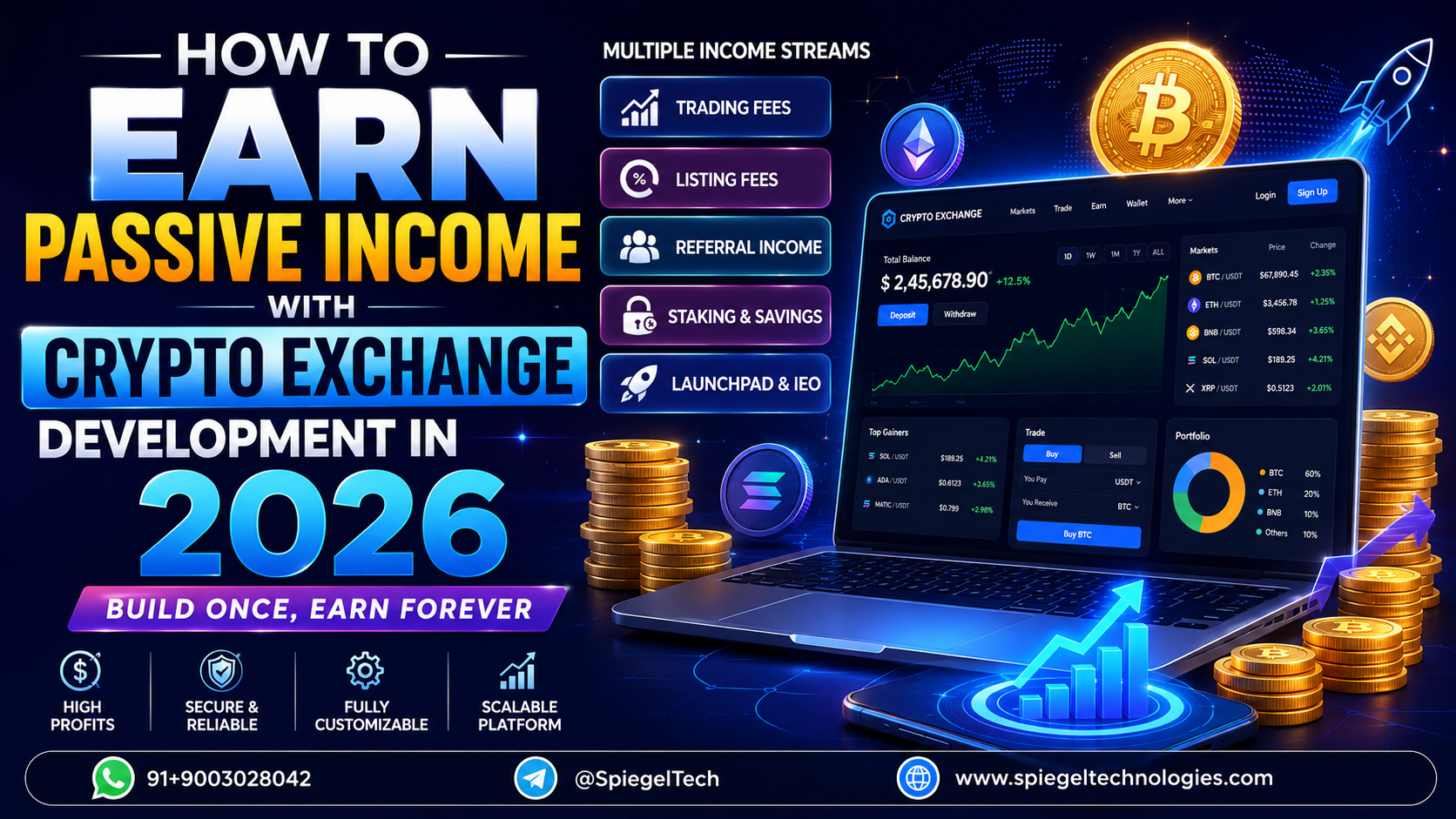
Trading Fees are the primary revenue driver. Small transaction fees applied during trades, settlements, and withdrawals generate substantial cumulative income as platform volume scales. The micro-fee model works because prediction market platforms facilitate enormous numbers of individual transactions.
Liquidity Incentives generate additional income by optimizing trading spreads and structuring rewards that attract and retain liquidity providers — who are essential to keeping markets active and prices accurate.
Premium Analytics represent a growing revenue tier. AI-powered forecasting dashboards, advanced market analysis tools, and institutional-grade data subscriptions can be offered at premium price points to serious traders and enterprise users.
Token Ecosystems allow platforms to introduce native utility tokens that support governance participation, staking rewards, and broader ecosystem engagement — creating a self-reinforcing community economy.
Strategic Partnerships including sponsored event markets, fintech integrations, and API access for institutional forecasters round out the revenue model for mature prediction market platforms.
These diverse income streams are a major reason why entrepreneurs exploring prediction market software development are increasingly viewing this sector as a fintech opportunity rather than a niche crypto project.
Revenue Streams Beyond the Basics
The modern prediction market business model has evolved well beyond simple transaction fees. Platforms operating in this space in 2026 generate revenue through event sponsorships, white-label prediction software licensing, enterprise forecasting solutions, API access for institutional clients, data monetization through anonymized trading insights, and community-governed token economies.
This revenue diversity positions prediction market platforms simultaneously as consumer fintech products, data intelligence businesses, and decentralized governance infrastructure — a compelling combination for investors and acquirers alike.
Startups partnering with an experienced prediction market software development company can accelerate their path to market while reducing both technical risk and infrastructure costs significantly.
Looking to build a prediction market platform like Polymarket?
Why Entrepreneurs Are Investing in Polymarket Clone Scripts
The surge of interest in building prediction market platforms has created strong demand for Polymarket clone scripts — pre-built, customizable software frameworks that replicate the core functionality of Polymarket while allowing entrepreneurs to add their own features, branding, and monetization layers.
A well-engineered Polymarket clone script dramatically reduces time to market. Instead of building smart contract infrastructure, oracle integrations, AMM liquidity systems, and a trading frontend from scratch — a process that can take twelve to eighteen months — startups can deploy a battle-tested foundation and focus their resources on differentiation: unique event categories, superior UX, AI-driven analytics, or niche vertical specialization.
For entrepreneurs who have validated the prediction market business model and are ready to move fast, a Polymarket clone script is often the most pragmatic starting point — provided the underlying code is audited, scalable, and built by an experienced prediction market software development team.
Why Prediction Market Platforms Are Growing So Rapidly
The explosion in prediction market platform adoption in 2026 isn't accidental. Several converging forces are driving it.
Demand for alternative forecasting is rising sharply as trust in traditional media and institutional polling continues to erode. Consumers increasingly trust crowd-sourced, incentivized forecasting over expert opinion with no skin in the game.
The broader Web3 ecosystem has matured enough to support mainstream adoption. DeFi infrastructure, wallet UX, and stablecoin liquidity have all improved dramatically, lowering the friction for new users entering prediction market platforms for the first time.
Mobile accessibility has democratized participation. Simplified interfaces and mobile-native design have made it possible for everyday users — not just crypto natives — to engage with prediction markets.
AI integration is turbocharging engagement. As AI-powered forecasting tools become embedded in prediction market platforms, retail traders gain access to analytical capabilities that were previously reserved for institutional players.
By 2030, prediction market platforms are expected to be integrated into economic forecasting, decentralized governance, investment research, and enterprise decision-making — making this sector far more than a niche Web3 curiosity.
Benefits and Risks of Decentralized Prediction Market Platforms
Like any emerging technology sector, prediction market platforms carry both meaningful advantages and real risks that entrepreneurs must weigh carefully.
Benefits include transparent on-chain transactions that anyone can audit, global accessibility without geographic restrictions, near-instant automated settlement, significantly lower intermediary costs compared to centralized alternatives, real-time crowd sentiment data with genuine financial backing, and community-driven market creation.
Risks include ongoing regulatory uncertainty across key markets, the potential for market manipulation in low-liquidity event pools, smart contract vulnerabilities that could expose user funds, liquidity volatility in niche markets, and ethical considerations around markets built on sensitive real-world events.
For startups entering this space, the path forward requires balancing robust compliance frameworks, scalable technical architecture, and genuine user trust — none of which can be shortcut.
The Future of Prediction Market Platforms in Web3
The trajectory for prediction market platforms points clearly upward. As blockchain technology matures, AI forecasting becomes more sophisticated, and retail participation continues to grow, these platforms will evolve from speculative trading venues into core infrastructure for economic forecasting, governance, and intelligence.
Entrepreneurs who move now — whether through a Polymarket clone script for speed or custom prediction market software development for differentiation — are positioning themselves at the leading edge of a sector that will look dramatically different and dramatically larger by 2030.
The convergence of crowd intelligence, blockchain transparency, and machine learning is creating a new category of digital forecasting ecosystems. The question for entrepreneurs in 2026 is not whether prediction market platforms will grow — it's whether they'll be building one.
Conclusion: Build the Next Generation of Prediction Market Platforms
Decentralized prediction market platforms are no longer a fringe experiment. They are rapidly becoming serious Web3 infrastructure backed by blockchain transparency, AI-driven insight, and genuine crowd intelligence. As Polymarket continues to set the benchmark, the opportunity for entrepreneurs to build scalable, revenue-generating alternatives has never been more accessible.
Whether you start with a Polymarket clone script to accelerate deployment or invest in full-cycle prediction market software development to build a uniquely differentiated platform, the market timing in 2026 is compelling. The right strategy, the right technology partner, and a clear monetization model are all it takes to stake your claim in one of Web3's fastest-growing sectors.
What is a Prediction Market Platform?
A prediction market platform is a marketplace where users trade shares based on the outcome of future events such as elections, crypto prices, sports, or global news. The market price reflects collective probability and acts as a real-time forecasting system.
How Does Polymarket Work?
Users connect a crypto wallet, deposit stablecoins, and trade “Yes” or “No” shares on events. Prices change based on demand. When the event is resolved, smart contracts automatically settle trades and distribute winnings.
What is a Polymarket Clone Script?
A Polymarket clone script is a ready-made software solution that replicates core prediction market features like trading systems, wallet integration, smart contracts, liquidity systems, and settlement logic. It helps launch platforms faster with lower development cost.
How Do Prediction Market Platforms Make Money?
They earn revenue through trading fees, withdrawal fees, liquidity incentives, premium analytics subscriptions, API access for institutions, and sponsored prediction markets.
Key Technologies Behind Prediction Markets
Prediction platforms use blockchain for transparency, smart contracts for automation, decentralized oracles for real-world data verification, AMMs for liquidity, and AI tools for forecasting and analytics.
Benefits of Prediction Market Platforms
They provide transparent forecasting, global access, automated settlement, real-time crowd intelligence, lower intermediary costs, and data-driven market insights.
Risks of Prediction Market Platforms
Key risks include regulatory uncertainty, smart contract vulnerabilities, liquidity issues in small markets, potential manipulation, and ethical concerns around sensitive events.