
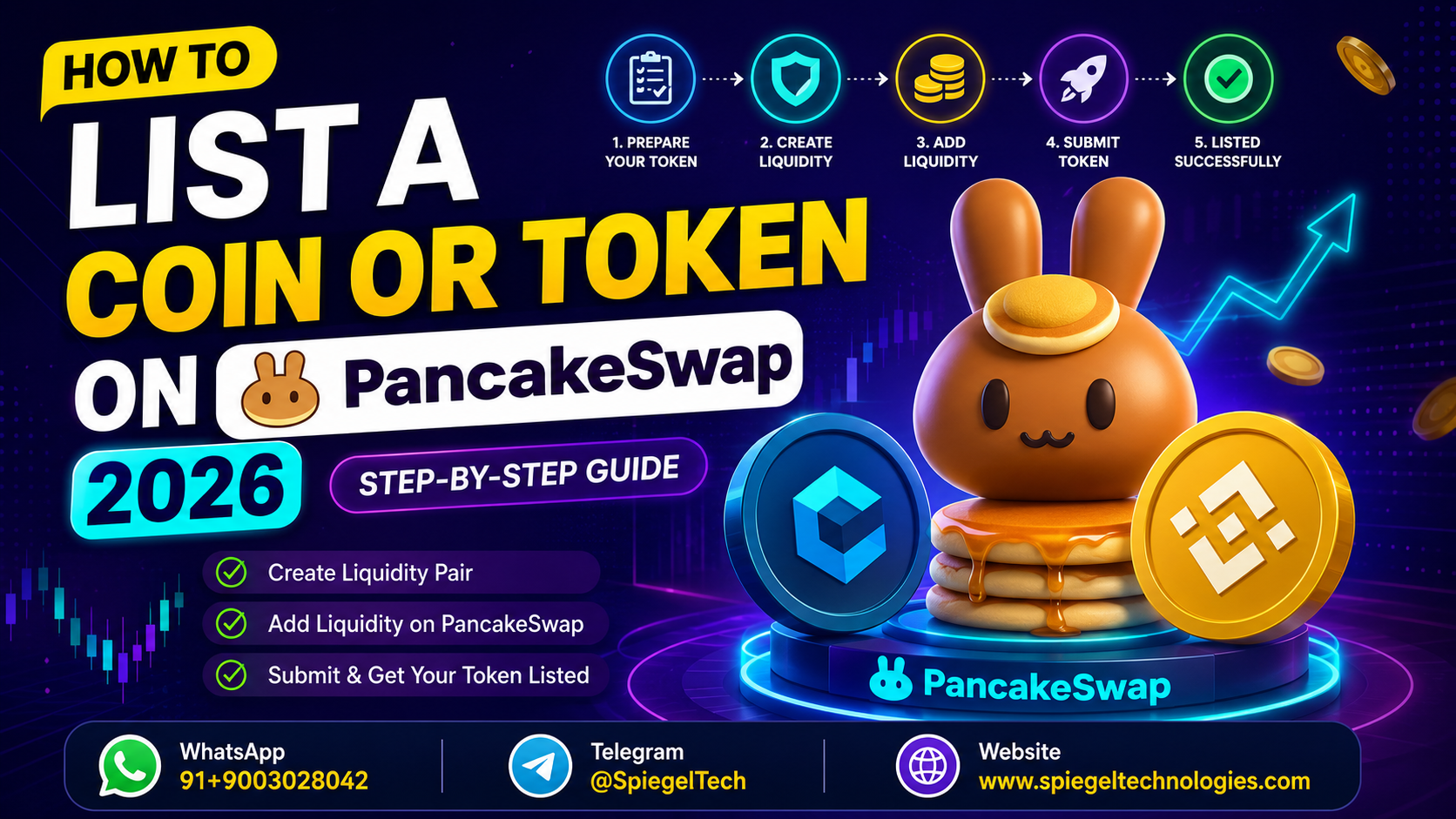
- A successful listing requires liquidity, contract verification, optimization, and strategic outreach.
- The core steps involve connecting your wallet, setting up liquidity, entering token details, choosing trading pairs, and setting a price.
- After listing, keep the momentum going with regular updates, active promotion, and consistent social media engagement.
- Use efficient data types and structures
- Minimize loops and unnecessary complex computations
- Avoid redundant storage reads and writes
- Rely on well-established, audited libraries and code patterns
- Increase Visibility: PancakeSwap hosts countless projects. Active promotion helps your token stand out and reach more potential investors.
- Build Community: Engaging with your audience turns early supporters into stakeholders who help spread the word and drive long-term momentum.
- Generate Buzz: Visible traction creates urgency — when people see a token gaining attention, they're more likely to jump in.
- Establish Credibility: Consistent promotion and community engagement signal that you're serious about your project's success, which builds the trust needed to attract investment.
How to List a Coin or Token on PancakeSwap2026
Listing your pancakeswap token can open the door to serious benefits — increased liquidity, broader exposure, and access to a community of investors who like getting in on projects early. Part of PancakeSwap's appeal is that it runs on the Binance Smart Chain, which means lower fees and faster transactions compared to many other decentralized exchanges.
But before your token goes live, there's groundwork to lay: building a liquidity pool, verifying and optimizing your smart contract, and following the right sequence of steps. This guide walks you through the entire Token Listing in PancakeSwap process, from prerequisites to post-launch promotion.
How PancakeSwap Token Listing Works :
What You Need Before Listing Your Token on PancakeSwap
Before diving into the listing process itself, there are a few essential boxes to check. These steps build your token's credibility, ensure smooth trading, and make your project more appealing to potential investors.
1. Liquidity Pool
The first requirement for any pancakeswap token listing is sufficient liquidity. Liquidity is what keeps your market functional — it ensures there are enough buyers and sellers for your token to trade at a fair, stable price.
To get there, you'll need to create a liquidity pool: a pool of funds traders can draw on to buy and sell your token. The larger the pool, the deeper your liquidity — and the smoother trading becomes for everyone involved.
2. Smart Contract Verification
Next, your smart contract needs to be verified. A verified contract reassures investors and traders that your token is legitimate and hasn't been tampered with or compromised by bad actors.
Services like CertiK or Solidity Finance can audit your contract's code and confirm it's secure and functioning as intended. Once verification is complete, users have a much easier time trusting — and investing in — your token.
3. Smart Contract Optimization
Alongside verification, your contract needs to be optimized for efficiency. A well-optimized contract is cleanly written, consumes minimal gas, and runs smoothly on the Binance Smart Chain.
Gas is the fee users pay to execute transactions on the blockchain — the less gas your contract requires, the cheaper it is for people to trade your token. To optimize effectively:
Step-by-Step Guide to Token Listing in PancakeSwap
Once your prerequisites are in place, the actual listing process is refreshingly straightforward. Follow these steps and your token will be live and trading before long.
Step 1: Connect Your Wallet
Start by connecting your wallet to PancakeSwap. Click "Connect" in the top right corner of the site and select your preferred wallet provider. PancakeSwap supports popular options like MetaMask and Trust Wallet, so finding one that fits shouldn't be a problem.
Step 2: Create the Liquidity Pool
Next, set up a liquidity pool for your token. Click "Trade" in the top menu, then select "Add Liquidity." Choose the trading pair you want to create the pool for and enter the amount of each token you're contributing. PancakeSwap automatically calculates the exchange rate and the number of liquidity tokens you'll receive in return — these represent your share of the pool.
Step 3: Add Your Token Details
With your liquidity pool established, it's time to add your token's details. Head to the main page and click "Create a Pair." Locate your token in the list, then fill in the token symbol, name, and decimal places.
Don't skip the logo — upload a PNG file with a resolution of at least 512×512 pixels. A polished logo makes your token instantly more recognizable and trustworthy.
Step 4: Set the Trading Pair
Now set the trading pair for your token. Click "Trade," then "Trade" again, find your token, and choose which pair you want it listed against — BNB or BUSD are common choices. If the pair doesn't already exist, you can create a new one.
Step 5: Set the Token Price
With your trading pair in place, set your token's price using the price slider on the trading page. Aim for a competitive price that draws genuine interest from buyers and sellers, and consider setting a price range to control how much movement is allowed.
Step 6: Provide Complete Token Information
Finally, fill in all the key details about your token — total supply, contract address, and any other information investors should know before trading. Click the "Info" button next to your token on the trading page and complete every field so traders can make informed decisions.
And that's it — your pancakeswap token is officially listed and ready to trade.
How Long Does It Take to List a Token on PancakeSwap?
Once you've met the prerequisites, the actual listing process on PancakeSwap is quick — typically 10 to 30 minutes from start to finish.
How Much Liquidity Should You Provide for a New Token?
For a newly created token, it's generally recommended to provide at least $400,000–$500,000 in liquidity. If raising that amount feels out of reach, an Initial DEX Offering (IDO) is one route worth exploring to help generate the capital you need.
Promoting Your PancakeSwap Listing
Getting your token listed is a major milestone — but the work doesn't stop there. To actually attract investors and traders, you need to put real effort into promoting your listing.
Why Promotion Matters
Promotion Strategies That Work
Paid Advertising Allocate budget toward paid advertising on crypto-specific platforms like Blockchain-Ads. This puts your listing in front of a wider, more targeted audience of crypto users based on their on-chain activity.
Social Media Use Twitter, Telegram, and Discord to announce your listing and keep your community in the loop. Post regular updates, engage directly with followers, and consider incentives like airdrops or giveaways to spark participation.
Influencer Marketing Partner with credible crypto influencers who have an engaged following. Choose people who genuinely align with your project's values — authentic enthusiasm goes a lot further than a paid mention.
Content Marketing Produce valuable content around your project — blog posts, videos, infographics, or a detailed whitepaper. Distribute it across your website, social channels, and relevant forums to pull in potential investors organically.
Email Marketing Build an email list of interested parties and nurture it with regular newsletters covering updates, exclusive content, and promotional offers to keep subscribers engaged.
Community Engagement Stay active in crypto forums and discussion communities. Answer questions, share useful knowledge, and add genuine value — this kind of consistent presence builds the trust that turns lurkers into investors.
Frequently Asked Questions About Token Listing in PancakeSwap
1. Do I need to pay a fee to list my token on PancakeSwap? PancakeSwap itself doesn't charge a direct listing fee for creating a trading pair — your main cost is the liquidity you provide and the gas fees for the transactions involved in setting up the pool and pair.
2. Can I list any BEP-20 token on PancakeSwap? Yes. Since PancakeSwap runs on the Binance Smart Chain, any BEP-20 token can be listed, as long as you've created the trading pair and supplied liquidity for it.
3. What happens if I don't verify my smart contract? Your token can technically still trade, but unverified contracts raise red flags for cautious investors. Verification builds trust and signals that your project hasn't cut corners on security.
4. Can I list a token without an existing trading pair? Yes — if the pair you want doesn't exist yet, PancakeSwap lets you create a new one directly through the "Add Liquidity" flow.
5. How do I increase liquidity after my pancakeswap token is already listed? You can add more funds to your existing liquidity pool at any time through the "Add Liquidity" option, increasing the pool's depth and improving price stability for traders.
6. Is $400K–$500K in liquidity a strict requirement? It's not a hard rule enforced by PancakeSwap, but it's a widely recommended benchmark for new tokens. Lower liquidity is possible, though it typically results in higher price volatility and less trader confidence.
7. How soon after listing should I start promoting my token? Immediately. The window right after your Token Listing in PancakeSwap is when momentum matters most — early visibility and community engagement set the tone for sustained interest.
Before You Go
Listing your token on PancakeSwap is a major milestone, but it's just the starting point of your journey in the crypto space. If you're ready to take your project further, explore a comprehensive Web3 marketing strategy to build on the momentum from your listing. And if you're considering additional exchanges down the line, understanding the broader token listing process will serve you well across platforms.
To keep your project moving forward, stay engaged with your community, monitor your token's performance closely, and keep an eye on emerging trends in the space.