
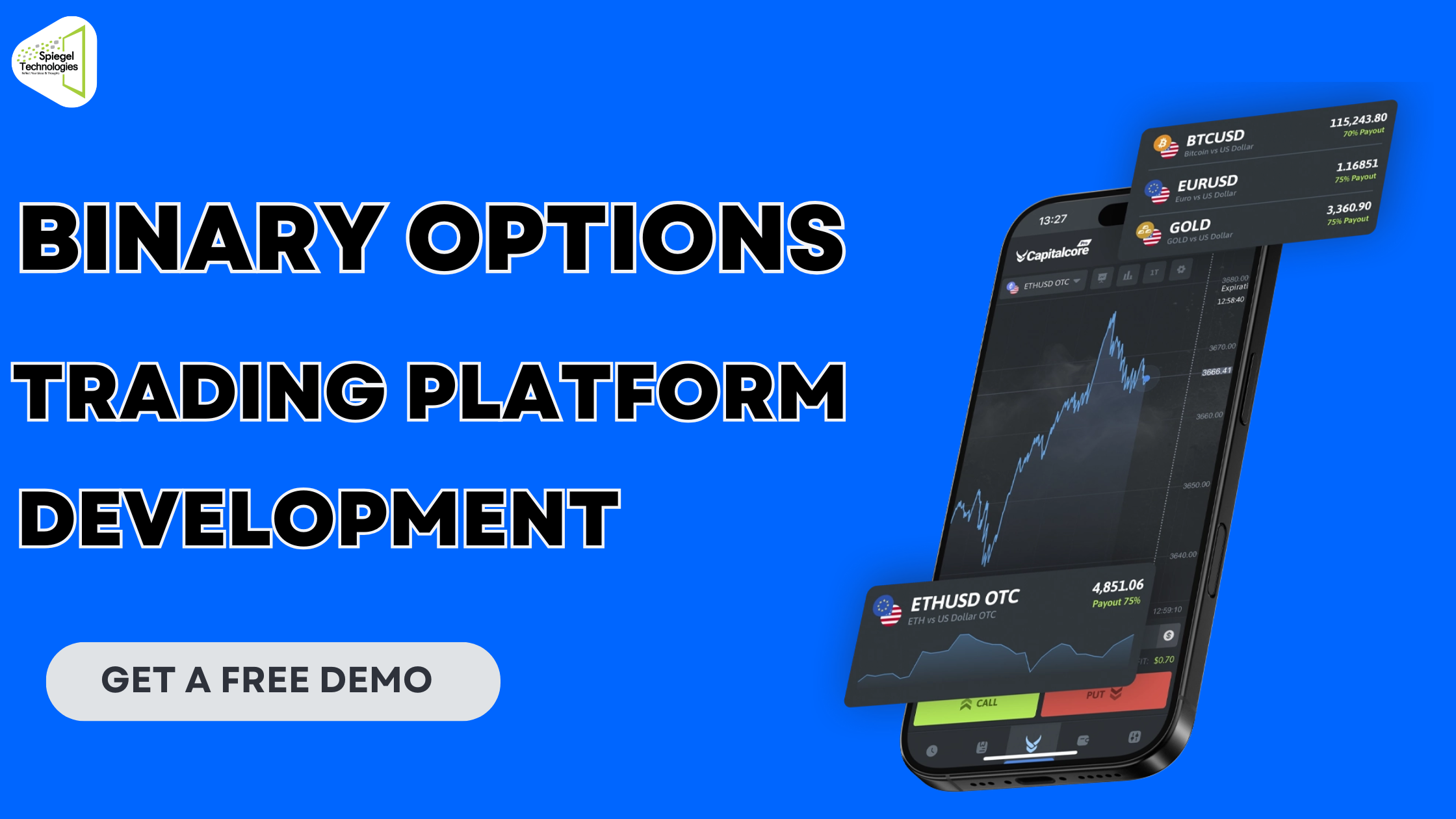
- A trader believes Gold will rise from $1,840 to above $1,850 within one hour
- They invest $100 with a 75% payout ratio
- If Gold reaches above $1,850 at expiration: Trader receives $175 ($100 + 75% profit)
- If Gold stays at or below $1,850: Trader loses the $100
- Constant 24/5 activity
- High liquidity
- Multiple daily trading opportunities
- Predictable events (central bank meetings, employment data)
- Apple, Microsoft (technology dominance)
- Tesla, Meta (growth and volatility)
- Amazon, Netflix (market leaders)
- Major indices: NASDAQ, S&P 500, Dow Jones (broader market exposure)
- Rapid price movements on company news
- Earnings reports create high volatility
- Technical patterns easier to identify
- Lower correlation between individual stocks
- Gold: Safe-haven asset, responds to economic uncertainty, fed policy
- Oil: Energy prices driven by supply/demand, geopolitical events
- Natural Gas: Weather-dependent, seasonal patterns
- Copper: Industrial demand indicator
- Supply/demand fundamentals
- Macroeconomic events
- Weather patterns and natural disasters
- Geopolitical tensions
- Bitcoin, Ethereum (established cryptocurrencies)
- Altcoins (emerging assets with higher volatility)
- DeFi tokens (newest, highest volatility)
- Extreme volatility (10-20% daily moves common)
- News-driven (regulatory announcements, technology updates)
- 24/7 global trading
- Lower capital requirements
- Simple 3-step account creation (email, password, verification)
- Personal information collection (name, address, phone)
- Document verification (ID, proof of address)
- Payment method setup
- Account type selection (demo or live)
- SSL encryption for all data transmission
- Password strength requirements
- Email/SMS verification
- Two-factor authentication options
- Session timeout for security
- Multiple timeframe options (1-minute to daily)
- Various chart types (candlestick, bar, line)
- Real-time price updates
- Trading volume visualization
- Technical indicators (moving averages, RSI, MACD, Bollinger Bands)
- Use TradingView charting library or build custom
- Ensure latency under 100 milliseconds
- Support for drawing tools (trend lines, support/resistance)
- Save favorite indicators and chart layouts
- Up/Down (basic call/put)
- Touch/No-Touch (price level prediction)
- In/Out (range trading)
- Ladder (multiple strike prices)
- Multiple expiration times (5-minute to monthly)
- Early exit options (sell before expiry)
- Adjustable stake amounts
- Variable payout percentages
- Forex: 50+ currency pairs (majors, minors, exotics)
- Stocks: 100+ global stocks
- Indices: S&P 500, NASDAQ, DAX, Nikkei, etc.
- Commodities: Gold, oil, natural gas, copper
- Cryptocurrencies: Bitcoin, Ethereum, top 20 altcoins
- Live price feeds with <1 second latency
- Accurate bid/ask spreads
- Trading volumes
- Open interest data
- Stop-loss orders (exit if price moves against position)
- Take-profit orders (lock in gains)
- Position sizing tools (calculate proper lot sizes)
- Daily loss limits (halt trading after maximum daily loss)
- Risk/reward ratio calculators
- Maximum drawdown alerts
- Portfolio heat (total exposure visualization)
- Volatility-adjusted position sizing
- Risk metrics dashboard
- Video tutorials (basics to advanced strategies)
- Written guides and articles
- Webinars with professional traders
- Strategy documentation
- Market analysis and commentary
- Risk-free practice environment
- Real market data but virtual money
- Same interface as live trading
- Helps traders develop skills safely
- Credit/debit cards (Visa, Mastercard)
- Bank transfers (wire, ACH)
- E-wallets (Skrill, Neteller)
- Cryptocurrency options
- Digital payment services
- PCI DSS compliance (payment card security)
- End-to-end encryption
- Secure transaction verification
- Clear transaction history
- Instant withdrawal processing
- Full functionality (deposit, trade, withdraw)
- Optimized touch interface
- Push notifications (price alerts, trade updates)
- Offline access to some features
- Biometric authentication
- iOS and Android compatibility
- <5 second trade execution
- Minimal data usage optimization
- Automatic sync with web platform
- Study existing platforms (IQ Option, Quotex, Olymp Trade, Nadex)
- Identify strengths and weaknesses
- Find underserved market segments
- Analyze user preferences and pain points
- Research regulations in target jurisdictions
- Understand licensing requirements
- Identify compliance obligations
- Plan legal structure
- Survey 100+ potential traders
- Interview experienced binary options traders
- Identify feature priorities
- Understand pricing sensitivity
- Spread Model: Platform takes difference between bid/ask prices
- Commission Model: Charge percentage on profitable trades
- Withdrawal Fees: Fee for withdrawing profits
- Affiliate Program: Pay partners for user referrals
- Premium Features: Charge for advanced tools (recommended)
- Calculate user acquisition costs
- Estimate lifetime value per trader
- Project monthly revenue at different user levels
- Determine break-even point
- React.js or Vue.js (interactive UI)
- HTML5/CSS3 (responsive design)
- WebSockets (real-time updates)
- Node.js + Express (JavaScript ecosystem)
- Or Python + Django (rapid development)
- Or Java Spring Boot (enterprise stability)
- PostgreSQL (primary data, transactional)
- Redis (real-time data caching)
- MongoDB (flexible document storage)
- AWS, Google Cloud, or Azure (scalability)
- Docker (containerization)
- Kubernetes (orchestration for high traffic)
- TradingView Lightweight Charts (recommended)
- Or custom charting development
- Frontend (user interface)
- Backend API (business logic)
- Market data engine (price feeds)
- Trading engine (order processing)
- Payment processor (financial transactions)
- Analytics system (reporting)
- SSL/TLS encryption (all communications)
- Database encryption (at rest)
- API authentication (token-based)
- Rate limiting (prevent abuse)
- DDoS protection (availability)
- GDPR (European users)
- CCPA (California users)
- Financial regulations (varies by jurisdiction)
- KYC/AML procedures (know your customer)
- Users table (authentication, profile info)
- Accounts table (trading accounts)
- Trades table (trade history)
- Transactions table (deposits/withdrawals)
- Assets table (prices, specifications)
- Authentication (login, registration, password reset)
- Trading (place trade, cancel trade, get trades)
- Accounts (balance, history, settings)
- Markets (asset list, prices, charts)
- Payments (deposit, withdraw, history)
- Input sanitization (prevent SQL injection)
- Business rule validation (sufficient balance, valid parameters)
- Error handling (clear error messages)
- Logging (audit trail for compliance)
- Login/Registration
- Dashboard (portfolio overview)
- Trading interface (place trades)
- Markets page (asset selection)
- Account settings
- Transaction history
- Educational resources
- Real-time price updates
- Chart interactions (zoom, pan, draw)
- One-click trading
- Quick setup for new trades
- Position management
- Every feature works as specified
- Edge cases handled properly
- Error messages are clear
- Flows are intuitive
- Penetration testing (attempt to break in)
- Vulnerability scanning (identify weaknesses)
- SQL injection prevention (verify)
- XSS prevention (verify)
- Load testing (1,000+ concurrent users)
- Stress testing (beyond normal capacity)
- Trade execution speed (<500ms)
- Chart responsiveness
- GDPR compliance verification
- Data protection procedures
- Financial regulation adherence
- Documentation and audit trails
- Final security audit
- Regulatory approval
- Backup systems tested
- Support team trained
- Deploy to production
- Monitor system health closely
- Support team active
- Monitor for technical issues
- Track error rates
- Monitor trade execution speeds
- Watch for system failures
- Respond to user issues
- Resolve critical bugs
- Optimize performance
- Expand asset offering
- Improve UI based on feedback
- Add advanced features (risk management, alerts)
- Expand to new markets
- Develop mobile app
- Launch marketing campaigns
- Continuous feature improvements
- Expand to new jurisdictions
- Add social trading features
- Build trader community
- Senior backend developer: $80,000 (8 months)
- Senior frontend developer: $80,000 (8 months)
- UI/UX designer: $40,000 (4 months)
- QA engineer: $40,000 (6 months)
- Subtotal: $240,000
- Cloud hosting (AWS/Google Cloud): $2,000-$5,000/month × 8 = $16,000-$40,000
- Development tools and licenses: $5,000-$10,000
- API integrations (TradingView, payment processors): $5,000-$15,000
- Subtotal: $26,000-$65,000
- SSL certificates: $1,000-$3,000
- Security audit: $15,000-$25,000
- Legal review and compliance: $10,000-$20,000
- Subtotal: $26,000-$48,000
- Real-time price data API: $2,000-$5,000/month × 8 = $16,000-$40,000
- Charting library (if not custom): $5,000-$10,000
- Subtotal: $21,000-$50,000
- Buffer for unexpected costs: $15,000-$30,000
- Using pre-built solutions for some components
- Smaller team (3-4 developers)
- Limited asset coverage initially
- Fewer features
- More complex features
- Larger development team
- Multiple market integrations
- Advanced risk management tools
- Mobile app developed simultaneously
- International expansion planned
- No federal binary options license (but regulations evolving)
- Not allowed to operate binary options platform (as of 2022)
- SEC oversight if offering securities products
- CFTC (Commodity Futures Trading Commission) regulations
- MiFID II compliance required
- ESMA restrictions (binary options heavily limited)
- National Financial Authority approval in each country
- GDPR compliance mandatory
- FCA (Financial Conduct Authority) authorization required
- Strict leverage limits
- Negative balance protection
- Australia: ASIC regulation
- Canada: Provincial Securities Commissions
- Singapore: MAS (Monetary Authority) regulation
- Dubai/Middle East: DFSA, SCA regulations
- Identity verification (government ID)
- Address verification (proof of residence)
- Source of funds verification
- Beneficial owner identification
- Monitor for suspicious activity
- Report suspicious transactions
- Maintain audit trails
- Regular compliance reviews
- Clear warnings about leverage risks
- Historical performance disclaimers
- Conflict of interest disclosures
- Plain language explanations
- Average user deposits: $500-$2,000
- Platform profit margin on losses: 5-15% of trading volume
- 100,000 active users × $500 monthly volume × 10% margin = $500,000/month
- Premium features add 5-10% additional revenue
- Affiliate programs add 2-5% additional revenue
- Year 1: -$300,000 to -$500,000 (development, launch, acquisition)
- Year 2: $200,000-$1,000,000 (growing user base)
- Year 3: $1,000,000-$5,000,000+ (mature platform, scaling)
- IQ Option (largest market share)
- Quotex (rapid growth)
- Olymp Trade (strong in emerging markets)
- Nadex (US-regulated)
- Superior UX/UI design
- Better educational resources
- Unique asset offerings
- Lower fees or better payouts
- Mobile-first platform
- Community features
- Legal in some jurisdictions, prohibited in others
- Highly regulated in developed countries
- Easier to launch in emerging markets
- Binary options face increasing regulatory scrutiny
- Business model sustainability questionable long-term
- Forex trading platform (less restricted)
- CFD platform (broader market acceptance)
- Options trading platform (traditional derivatives)
- Crypto trading platform (different regulatory framework)
- Months 1-6: Heavy investment, minimal revenue (user acquisition)
- Months 7-12: Revenue growing, approaching break-even
- Year 2: Profitability achievable with 50,000+ users
- Year 3: Significant profitability with 200,000+ users
- User acquisition efficiency
- Churn rate (user retention)
- Average revenue per user
- Operational efficiency
- Marketing effectiveness
- Inadequate security (leads to hacks, user losses, lawsuit)
- Poor performance (traders leave for faster platforms)
- Missing key features (users go to competitors)
- Weak compliance (regulatory shutdown)
- Insufficient funding (run out before profitability)
- Poor user acquisition strategy (too expensive per user)
- Inadequate support (user complaints, bad reputation)
- Lack of differentiation (can't compete with established players)
- Regulatory environment is tightening (not loosening)
- Binary options facing restrictions in major markets
- Competition is intense from established players
- User acquisition costs are high
- Compliance burden is substantial
- Forex trading platforms (less restricted)
- Cryptocurrency trading platforms (emerging opportunity)
- Social trading platforms (copy trading)
- Stock trading platforms (traditional but profitable)
- Options trading platforms (regulated derivatives)
Next-Gen Binary Options Trading Software Solutions for Modern Fintech Enterprises
Introduction: Understanding the Binary Options Market Opportunity
Binary options trading has evolved into a significant segment of the global financial markets. The appeal is straightforward: traders make a simple prediction about whether an asset's price will rise or fall within a set timeframe. If correct, they receive a fixed payout. If wrong, they lose the investment. This simplicity has attracted millions of traders worldwide seeking fast, decisive trading opportunities.
The market for binary options trading platforms continues to expand, driven by technological advances, increased retail participation in financial markets, and demand for alternative trading instruments. However, building a successful binary options platform requires more than just technology—it demands deep understanding of financial markets, strict regulatory compliance, robust security, and features that traders actually use.
This comprehensive guide explores everything required to develop a competitive binary options trading platform, from market analysis through post-launch optimization.
Understanding Binary Options: The Fundamentals
What Are Binary Options?
A binary option is a financial derivative that offers a fixed payout if a prediction about an asset's price movement proves correct. The outcome is binary: either the trader wins the fixed payout or loses the entire investment. There's no middle ground.
Simple Example:
Types of Binary Options
Up/Down (Call/Put): The most common type. Trader predicts whether price will be above (call) or below (put) the current price at expiration.
Touch/No-Touch: Trader predicts whether price will touch a specified level (touch) or won't reach it (no-touch) before expiration.
In/Out (Range/Boundary): Trader predicts whether price will stay within a specified range (in) or break outside it (out).
Ladder: Multiple strike prices with varying payout percentages. Larger moves result in larger payouts.
Why Traders Use Binary Options
Speed: Trades conclude within minutes to hours, not days or weeks Simplicity: Clear profit/loss outcome before entering trade Fixed Risk: Know maximum loss upfront (the investment amount) Accessibility: Lower capital requirements than traditional trading Volatility Capture: Benefit from quick price movements without directional bias
Current Market Landscape and Profitable Assets
Currency Markets (Forex)
Currency pairs remain highly volatile due to central bank policies, economic data, and geopolitical events. Major pairs like EUR/USD, GBP/USD, and USD/JPY experience frequent price movements driven by interest rate decisions and inflation management.
Trading Advantages:
Stocks and Indices
Global companies offer short-term trading opportunities. Highly traded stocks include:
Trading Characteristics:
Commodities
Commodity markets provide diverse opportunities:
Market Dynamics:
Cryptocurrencies
Digital assets offer 24/7 trading with high volatility:
Characteristics:
Essential Features for a Competitive Binary Options Platform
1. Intuitive Registration and Account Management
Registration Process:
Security Measures:
2. Real-Time Price Charts and Technical Analysis
Chart Capabilities:
Implementation:
3. Diverse Trading Tools and Options
Option Types:
Flexibility Features:
4. Multiple Asset Classes
Comprehensive Coverage:
Real-Time Data:
5. Risk Management Tools
Essential Protections:
Advanced Features:
6. Educational Resources
Learning Materials:
Demo Trading:
7. Secure Payment Processing
Payment Methods:
Security:
8. Mobile Trading Platform
Mobile App Features:
Technical Requirements:
Development Process: 9-Step Roadmap
Step 1: Market Research and Requirements Analysis (Weeks 1-4)
Competitive Analysis:
Regulatory Landscape:
User Research:
Step 2: Define Business Model and Monetization (Weeks 5-6)
Revenue Models:
Profitability Analysis:
Step 3: Technology Stack Selection (Weeks 7-8)
Frontend Development:
Backend Development:
Database:
Infrastructure:
Charting:
Step 4: System Architecture and Security Design (Weeks 9-12)
Architecture Components:
Security Architecture:
Regulatory Compliance:
Step 5: Database Design and API Development (Weeks 13-18)
Database Schema:
API Endpoints:
Data Validation:
Step 6: Frontend Development (Weeks 19-28)
Core Pages:
Interactive Features:
Step 7: Testing and Quality Assurance (Weeks 29-36)
Functional Testing:
Security Testing:
Performance Testing:
Regulatory Testing:
Step 8: Launch and Monitoring (Weeks 37-40)
Pre-Launch:
Launch:
Post-Launch Monitoring:
Step 9: Optimization and Feature Expansion (Ongoing)
Phase 1 (Months 1-3):
Phase 2 (Months 4-6):
Phase 3 (Months 7+):
Cost Analysis: Budget Planning for Development
Minimum Viable Product (MVP) Development
Breakdown by Category:
Development Team (60% of budget):
Infrastructure and Tools (10% of budget):
Security and Compliance (15% of budget):
Market Data and Feeds (10% of budget):
Contingency (5% of budget):
Total MVP Cost: $328,000-$593,000
Average: $450,000 for complete, functional platform
Cost Variations
Lower Cost ($250,000-$350,000):
Higher Cost ($600,000-$1,000,000+):
Regulatory Considerations: Non-Negotiable Requirements
Licensing Requirements by Jurisdiction
United States:
European Union:
United Kingdom:
Other Jurisdictions:
Compliance Obligations
KYC (Know Your Customer):
AML (Anti-Money Laundering):
Risk Disclosure:
Frequently Asked Questions
1. How Much Revenue Can a Binary Options Platform Generate?
Revenue Model Breakdown:
Realistic Projections:
2. What's the Competitive Landscape Like?
Established Competitors:
Differentiation Opportunities:
3. Is a Binary Options Platform Legal?
Realistic Assessment:
Alternatives to Consider:
4. How Long Until the Platform Is Profitable?
Timeline Estimate:
Key Factors:
5. What Are Common Mistakes to Avoid?
Development Mistakes:
Business Mistakes:
Conclusion: Is Building a Binary Options Platform Right for You?
Building a binary options trading platform is complex, expensive, and highly regulated. Success requires:
✓ Substantial capital ($300,000-$500,000+ minimum) ✓ Expert team (developers, traders, compliance specialists) ✓ Regulatory navigation (different in every jurisdiction) ✓ Robust security (user trust is paramount) ✓ Differentiation strategy (how you compete) ✓ Long-term commitment (profitability takes 2-3 years minimum)
Key Considerations:
Alternative Opportunities to Consider:
If you proceed with binary options platform development, partner with experienced firms specializing in financial software. The cost of mistakes is high—security breaches or compliance violations can destroy the business overnight.